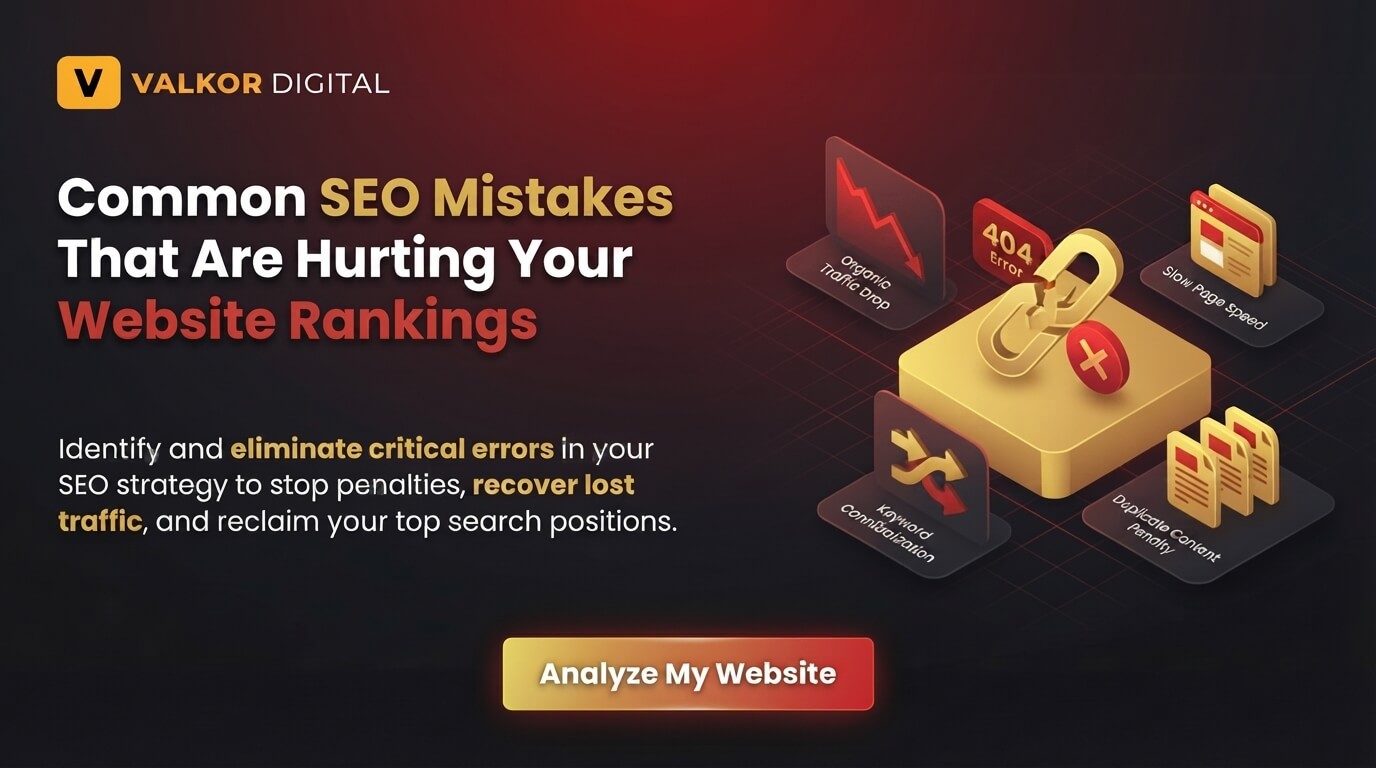
Many businesses invest significant time and money into their websites, only to see disappointing search performance. In most cases, the issue isn’t a lack of effort — it’s a handful of common SEO mistakes quietly undermining otherwise solid content and design. Identifying and correcting these issues can often produce noticeable ranking improvements without a complete website overhaul.
This guide breaks down the most frequent SEO errors to avoid, the website ranking mistakes that catch even experienced site owners off guard, and the technical SEO issues that often go unnoticed until they’ve already impacted performance.
Why Small SEO Mistakes Have a Big Impact
Search engines evaluate hundreds of ranking factors, and even minor issues — when left unaddressed — can compound over time. A slow-loading page, a missing meta description, or an unoptimized image might seem insignificant individually, but together they can meaningfully hold a website back from ranking where it should.
Understanding these common SEO mistakes is the first step toward building a website that performs well both for search engines and for the people actually visiting it.
Content-Related SEO Mistakes
1. Keyword Stuffing
Overloading content with a target keyword in an unnatural way was once a common tactic, but modern search engines penalize this approach. Keyword stuffing makes content harder to read and can trigger ranking penalties rather than improvements.
2. Thin or Duplicate Content
Pages with very little unique content, or content copied from other sources, struggle to rank because search engines prioritize original, valuable information. Duplicate content — even unintentional duplication across similar pages — can also confuse search engines about which page to rank.
3. Ignoring Search Intent
Content that doesn’t match what users are actually looking for tends to perform poorly, regardless of keyword optimization. Understanding whether a search is informational, navigational, or transactional helps ensure content meets user expectations.
4. Poor Internal Linking
Failing to link related pages together makes it harder for both users and search engines to navigate a website. Strong internal linking distributes authority across pages and helps visitors find related information easily.
Technical SEO Mistakes That Hurt Rankings
Beyond content, many technical SEO issues operate behind the scenes but have a direct impact on how well a website performs in search results.
1. Slow Page Load Speed
Page speed is a confirmed ranking factor, and slow-loading pages often see higher bounce rates. Large, uncompressed images and excessive scripts are common culprits behind sluggish performance.
2. Poor Mobile Optimization
With the majority of searches happening on mobile devices, a website that isn’t fully responsive creates a poor user experience and can significantly hurt rankings, since search engines prioritize mobile-friendly sites.
3. Missing or Duplicate Meta Tags
Meta titles and descriptions help search engines and users understand what a page is about. Missing tags, or using the same tags across multiple pages, weakens a site’s ability to stand out in search results.
4. Broken Links and 404 Errors
Broken internal or external links frustrate users and waste crawl budget, making it harder for search engines to index a site efficiently. Regularly auditing for broken links helps maintain a healthy site structure.
5. Incorrect Use of Robots.txt or Noindex Tags
Misconfigured robots.txt files or accidental noindex tags can prevent search engines from crawling or indexing important pages entirely, effectively making them invisible in search results.
Website Ranking Mistakes Beyond Technical SEO
1. Neglecting Local SEO Signals
For businesses that rely on local customers, ignoring local SEO — such as Google Business Profile optimization or location-specific content — is one of the most damaging website ranking mistakes, especially in competitive markets.
2. Ignoring Backlink Quality
Not all backlinks are beneficial. Links from low-quality or irrelevant websites can do more harm than good, while a smaller number of high-authority, relevant backlinks typically provide much stronger ranking value.
3. Failing to Update Old Content
Content that was accurate and competitive when published can quickly become outdated. Regularly refreshing older pages with updated information helps maintain rankings over time rather than allowing them to decline.
4. Overlooking Website Security
Websites without HTTPS encryption are flagged as insecure by browsers, which can damage both user trust and search rankings. Ensuring proper SSL implementation is a basic but essential ranking factor.
How to Identify SEO Errors to Avoid on Your Website
Conduct a Full Site Audit
A comprehensive audit examines technical performance, content quality, backlink profile, and on-page optimization to uncover issues that may not be immediately visible.
Monitor Search Console Data
Google Search Console provides direct insight into indexing issues, mobile usability problems, and search performance trends, making it an essential tool for catching SEO errors to avoid early.
Review Analytics for Behavioral Red Flags
High bounce rates, low time-on-page, or declining organic traffic often signal underlying SEO issues that require closer investigation.
Get a Professional Assessment
Because SEO involves many interconnected factors, it’s often difficult to catch every issue through a self-review alone. Professional SEO audit services can identify both obvious and hidden problems, providing a clear roadmap for correcting them efficiently.
Final Thoughts
Correcting common SEO mistakes doesn’t always require a complete website rebuild — often, targeted fixes to technical issues, content quality, and site structure can produce meaningful ranking improvements. By addressing the website ranking mistakes outlined in this guide and staying alert to ongoing technical SEO issues, businesses can build a stronger, more sustainable search presence over time.
Regularly auditing your website and correcting these SEO errors to avoid ensures your site continues to perform well as search engine algorithms and user expectations evolve.
Frequently Asked Questions
What is the most common SEO mistake businesses make?
Ignoring technical SEO issues, such as slow page speed and poor mobile optimization, is one of the most frequent and damaging mistakes businesses overlook.
How do I know if my website has SEO problems?
Signs include declining organic traffic, high bounce rates, poor search rankings for target keywords, and indexing errors shown in Google Search Console.
Can fixing SEO mistakes improve rankings quickly?
Some fixes, like resolving broken links or missing meta tags, can show improvements within weeks, while others, such as content and backlink issues, may take a few months.
Is keyword stuffing still a problem for SEO in 2026?
Yes. Search engines continue to prioritize natural, readable content, and keyword stuffing can result in lower rankings or penalties.
Should I hire a professional to fix SEO mistakes, or can I do it myself?
Minor issues can often be fixed independently, but a professional audit is recommended for identifying deeper technical or structural problems that aren’t easily visible.