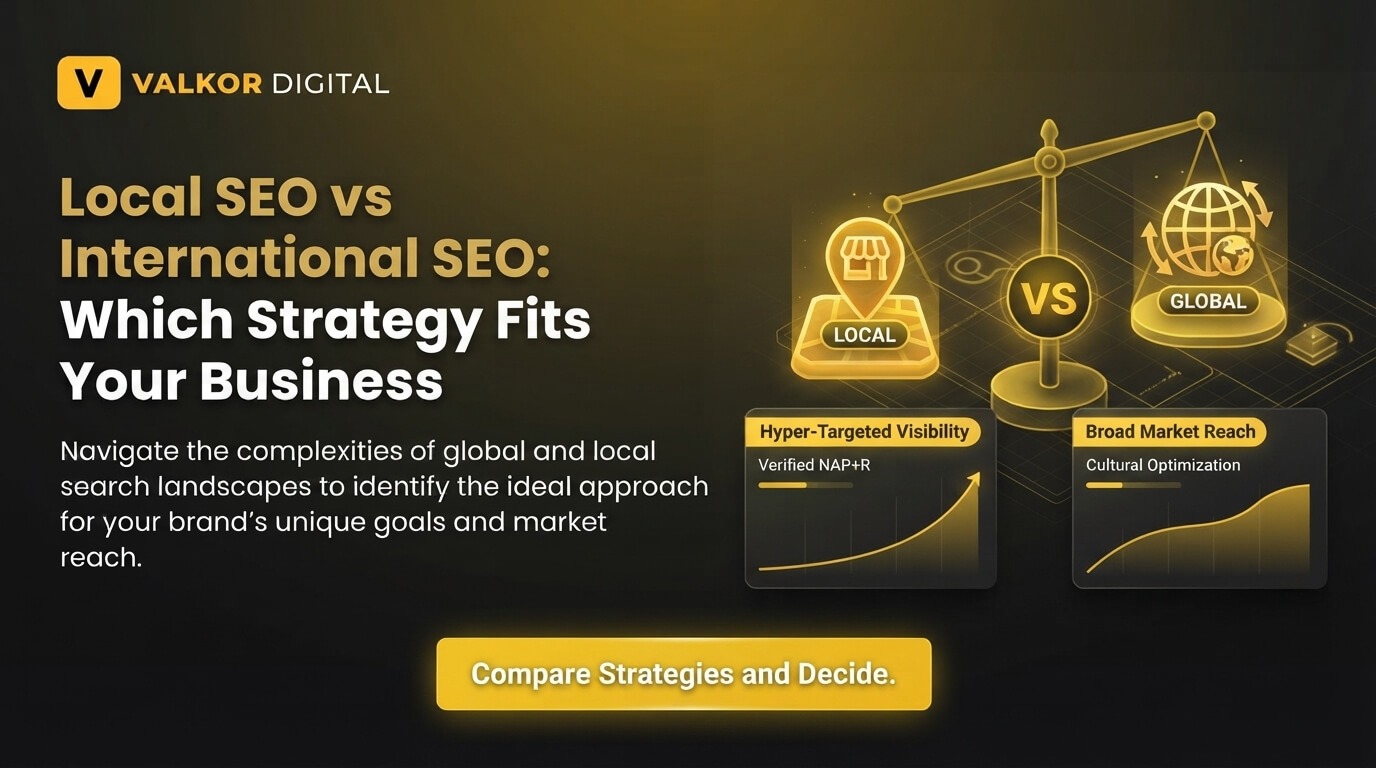
Choosing the right search engine optimization approach can significantly influence how effectively a business reaches its target audience. For companies deciding between local SEO vs international SEO, understanding the core differences between these two strategies is essential before committing time and budget to either approach. While both aim to improve visibility on search engines, they serve fundamentally different business goals, audiences, and technical requirements.
This guide breaks down how each strategy works, when to use them, and how to determine which one aligns best with your business objectives in 2026.
What Is Local SEO?
Local SEO focuses on improving a business’s visibility within a specific geographic area, such as a city, region, or country. It’s designed for businesses that serve customers in a defined location, including restaurants, clinics, retail stores, and service-based companies like law firms or agencies.
A strong local SEO strategy typically includes optimizing Google Business Profile listings, gathering local reviews, building location-specific content, and ensuring consistent business information (name, address, phone number) across online directories. For businesses that rely on foot traffic or serve clients within a particular city, this approach is often the most effective starting point.
Key Elements of Local SEO
Google Business Profile Optimization A fully optimized profile helps businesses appear in local map packs and location-based search results, which is often the first place potential customers look.
Localized Content Creating content that references specific neighborhoods, landmarks, or regional terminology helps search engines understand the business’s relevance to a particular area.
Local Citations and Directories Consistent listings across local directories strengthen credibility and improve local search rankings.
Customer Reviews Positive reviews on platforms like Google and Yelp play a significant role in local ranking algorithms and customer trust.
What Is International SEO?
International SEO, on the other hand, is designed for businesses that want to reach audiences across multiple countries, regions, or languages. This approach involves a broader technical and content strategy to ensure a website performs well in different international search markets.
A well-executed global SEO strategy requires careful planning around language targeting, currency display, regional content variations, and technical configurations such as hreflang tags, which tell search engines which version of a page to show users in different countries.
Key Elements of International SEO
Hreflang Implementation This technical element ensures search engines serve the correct language or regional version of a webpage to the right audience.
Multi-Language Content Beyond simple translation, content often needs to be culturally adapted to resonate with audiences in different regions.
Country-Specific Domains or Subdirectories Businesses must decide between using ccTLDs (country-code domains), subdomains, or subdirectories to organize international content effectively.
Localized Keyword Research Search behavior varies by country, so keyword research must be conducted separately for each target market rather than relying on a single global keyword list.
Local SEO vs International SEO: Core Differences
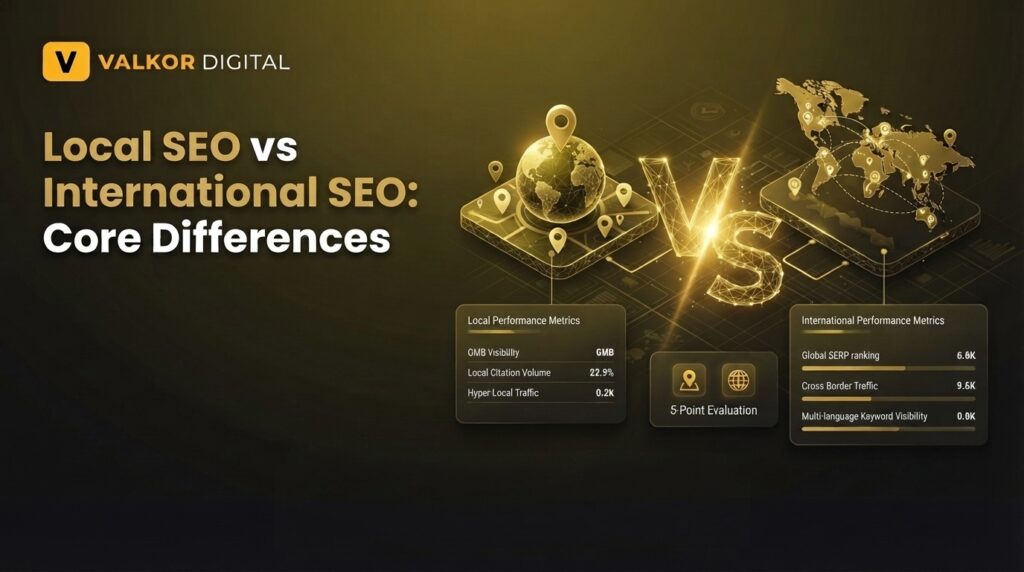
Understanding local SEO vs international SEO comes down to recognizing how audience scope, technical setup, and content strategy differ between the two approaches.
Audience Scope
Local SEO targets a narrow, geographically defined audience, while international SEO targets multiple audiences across different countries or regions simultaneously.
Technical Complexity
International SEO generally requires more advanced technical implementation, including hreflang tags, currency localization, and multi-regional site architecture. Local SEO, by comparison, relies more heavily on business listings, citations, and localized content.
Content Strategy
Local SEO content often centers on location-specific service pages and community engagement, whereas international SEO demands culturally adapted content tailored to each target market’s language and preferences.
Competitive Landscape
Local SEO typically involves competing against a smaller pool of nearby businesses, while international SEO means competing on a much larger scale, often against established global brands.
How to Choose the Right Strategy for Your Business
When Local SEO Makes Sense
If your business serves customers within a specific city or region — such as a local service provider, retail shop, or professional practice — a local SEO strategy is usually the more practical and cost-effective choice. It allows businesses to build strong visibility within their community without the added complexity of managing multiple international markets.
When International SEO Makes Sense
Businesses looking to expand into new countries, sell products globally, or serve clients in multiple regions will benefit more from an international approach. This is particularly relevant for e-commerce businesses, SaaS companies, and service providers with a scalable, location-independent offering.
Can a Business Use Both?
Yes. Many growing businesses eventually combine both strategies — maintaining strong local visibility in their home market while expanding into new regions internationally. In these cases, a hybrid approach ensures the business doesn’t lose its local customer base while pursuing broader growth.
Practical International SEO Tips for Businesses Expanding Abroad
For businesses ready to scale beyond their home market, these international SEO tips can help lay a strong foundation:
- Conduct market-specific keyword research rather than assuming search terms translate directly between languages.
- Implement hreflang tags correctly to avoid duplicate content issues and ensure the right regional page appears in search results.
- Adapt content culturally, not just linguistically, to better resonate with each target audience.
- Monitor performance by region using separate tracking for each target market to identify what’s working and what needs adjustment.
- Ensure fast loading speeds globally by using a content delivery network (CDN) to serve pages quickly regardless of user location.
Why Getting Professional Guidance Matters
Both local and international SEO require ongoing strategy, technical precision, and consistent monitoring to deliver results. Businesses that attempt either approach without proper planning often see inconsistent rankings or wasted marketing spend. Working with an experienced team, such as those offering local SEO services in Karachi, can help businesses build a strategy tailored to their specific market — whether that means dominating local search results or successfully expanding into new international markets.
Final Thoughts
Deciding between local SEO vs international SEO ultimately depends on where your customers are and where your business wants to grow. A focused local SEO strategy works best for businesses serving a specific community, while a well-planned global SEO strategy is essential for companies aiming to compete across multiple countries. For many businesses, the right path involves starting locally and expanding internationally as growth allows, ensuring each stage of expansion is supported by the right technical and content strategy.
Frequently Asked Questions
What is the main difference between local SEO and international SEO?
Local SEO focuses on ranking within a specific city or region, while international SEO targets audiences across multiple countries or languages, requiring more advanced technical setup.
Can a small business benefit from international SEO?
Yes, particularly if the business sells products online or offers services that aren’t limited by location, such as e-commerce or digital service providers.
Is local SEO still important if a business wants to go global?
Yes. Many businesses continue to benefit from local SEO even while expanding internationally, especially if they maintain a physical presence or strong customer base in their home market.
How long does it take to see results from an SEO strategy?
Both local and international SEO typically take three to six months to show measurable results, depending on competition, website history, and consistency of effort.
Do I need a different website for international SEO?
Not necessarily. Many businesses use subdirectories or subdomains within their existing website rather than creating entirely separate sites for each target market.