Search Engine Optimization is not a single activity but a combination of strategies working together to improve a website’s visibility. Among the most common questions business owners ask is the difference between on-page vs off-page SEO. Understanding this distinction is essential for building an effective search strategy, since both elements play a unique role in helping a website rank higher and attract the right audience. This guide breaks down on-page vs off-page SEO in detail, along with the techniques and strategies used in each.
Understanding On-Page vs Off-Page SEO
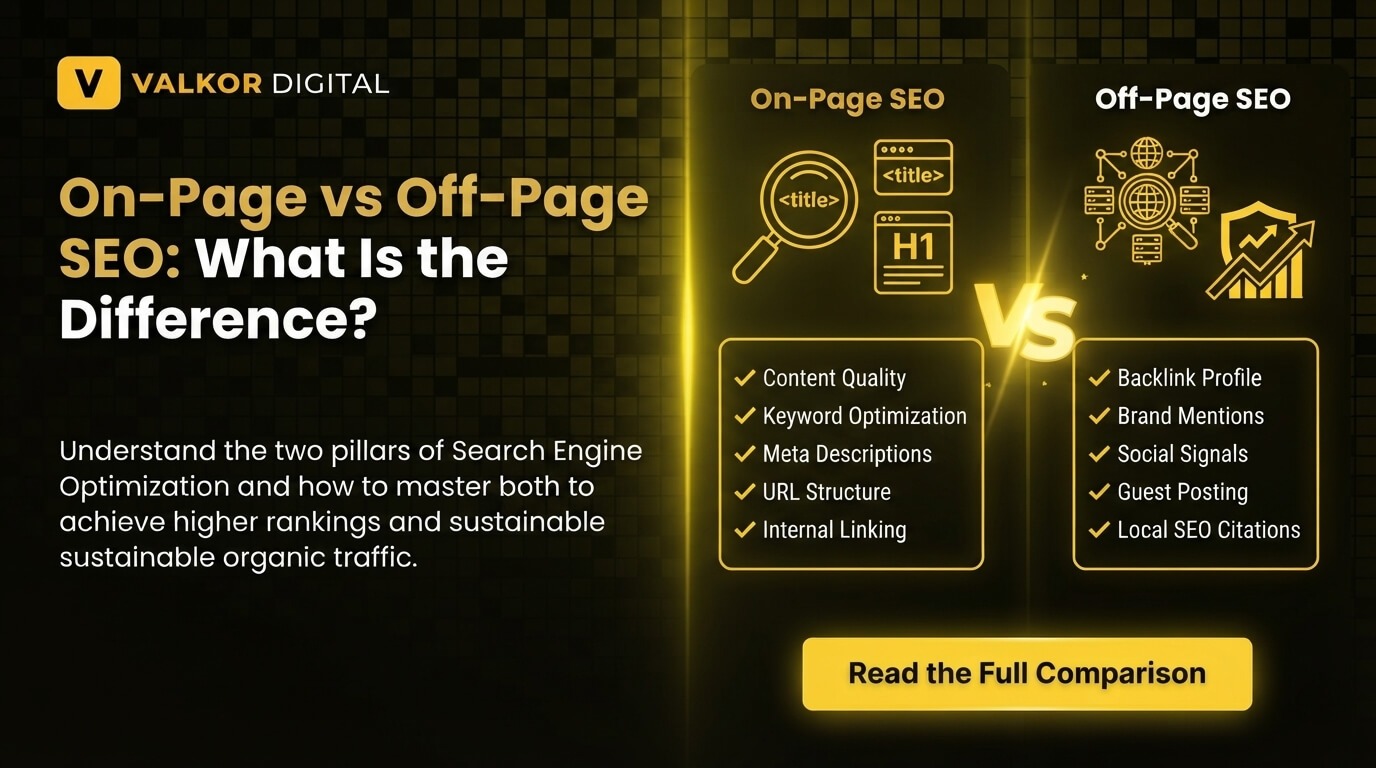
Before diving into specific techniques, it helps to understand the broader concept of on-page and off-page SEO. On-page SEO refers to everything you control directly on your website, such as content, headings, and internal links. Off-page SEO, on the other hand, refers to actions taken outside your website that influence how search engines perceive its authority and trustworthiness, such as backlinks and brand mentions.
Both categories fall under the broader umbrella of the different types of SEO that businesses use to build a strong online presence. While they function differently, they are deeply interconnected, and a successful SEO strategy requires attention to both.
Why the On-Page vs Off-Page SEO Distinction Matters
Many businesses focus heavily on one side while neglecting the other, which often leads to inconsistent results. Recognizing the on-page vs off-page SEO distinction allows businesses to allocate resources properly, ensuring that both the technical foundation of the website and its external reputation are strong.
What Is On-Page SEO?
On-page SEO includes all the optimization efforts made directly within a website to help search engines understand its content and relevance. This is the foundation of any strong SEO campaign, since search engines need clear signals about what a page offers before they can rank it appropriately.
Common On-Page SEO Techniques
Some of the most effective on-page SEO techniques include:
- Keyword optimization: Naturally incorporating relevant keywords into titles, headings, and body content.
- Meta titles and descriptions: Writing clear, compelling meta tags that improve click-through rates.
- Header tag structure: Using H1, H2, and H3 tags to organize content logically for both users and search engines.
- Internal linking: Connecting related pages within the same website to improve navigation and distribute authority.
- Image optimization: Adding descriptive alt text and compressing images for faster load times.
- Content quality: Producing well-researched, valuable content that directly answers user search intent.
These on-page SEO strategies form the backbone of a website’s ability to communicate relevance to search engines, making them a critical starting point for any SEO strategy.
Technical Elements of On-Page SEO
Beyond content-related techniques, on-page SEO also includes technical elements such as page loading speed, mobile responsiveness, secure connections, and clean URL structures. These factors directly affect user experience, which search engines increasingly prioritize when determining rankings.
What Is Off-Page SEO?
Off-page SEO refers to actions taken outside of your own website that influence its authority, credibility, and reputation in the eyes of search engines. While on-page SEO focuses on what happens within your site, off-page SEO strategies are centered around building trust through external validation.
Common Off-Page SEO Strategies
Some widely used off-page SEO strategies include:
- Backlink building: Earning links from reputable, relevant websites to signal authority and trustworthiness.
- Guest posting: Contributing valuable content to other websites in exchange for a backlink and exposure.
- Social media engagement: Building brand presence and driving referral traffic through active social channels.
- Influencer and brand mentions: Gaining visibility through partnerships or organic mentions from trusted voices.
- Local citations: Listing your business accurately across directories to strengthen local search visibility.
These off-page SEO strategies help establish a website’s reputation beyond its own domain, which search engines interpret as a strong signal of trust and authority.
Why Off-Page SEO Takes Time
Unlike on-page changes that can be implemented immediately, off-page SEO strategies often require sustained effort over time. Building genuine backlinks and brand authority does not happen overnight, which is why patience and consistency are essential for long-term success.
On-Page vs Off-Page SEO: Key Differences
To summarize the on-page vs off-page SEO comparison clearly, it helps to look at their core distinctions side by side.
Control and Ownership
On-page SEO is entirely within your control, since it involves changes made directly to your website. Off-page SEO, however, relies on external factors such as other websites choosing to link back to your content.
Focus Area
On-page SEO focuses on relevance and user experience, ensuring content matches search intent. Off-page SEO focuses on authority and trust, signaling to search engines that your website is credible and worth ranking highly.
Implementation Timeline
On-page changes can often show results relatively quickly, while off-page efforts, such as backlink building, typically take longer to generate measurable impact.
Exploring the Different Types of SEO
Beyond on-page and off-page SEO, there are other types of SEO that businesses should be aware of, including technical SEO, local SEO, and mobile SEO. Each type addresses a specific aspect of search visibility, and a comprehensive strategy typically incorporates elements from multiple categories to achieve the best results.
Understanding these types of SEO helps businesses see the bigger picture: on-page and off-page SEO are not standalone tactics but part of a broader ecosystem designed to improve overall search performance.
Why Businesses Need Both On-Page and Off-Page SEO
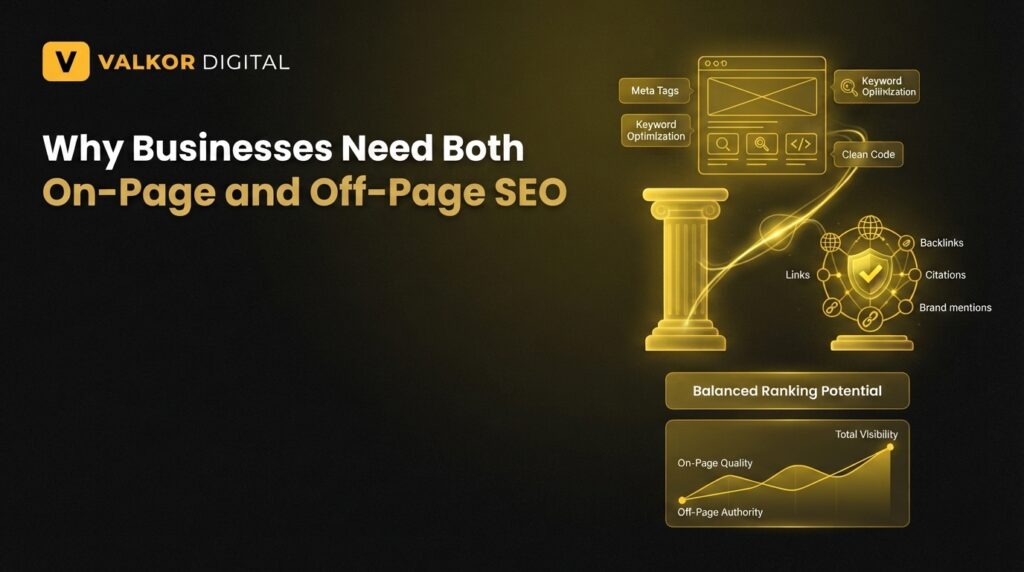
Focusing solely on one side of the on-page vs off-page SEO equation rarely produces sustainable results. A website with excellent content but no backlinks may struggle to build authority, while a site with strong backlinks but poor content may fail to retain visitors or convert them into customers. The most successful SEO strategies combine strong on-page foundations with consistent off-page authority building.
For businesses looking to implement both strategies effectively, partnering with a professional SEO agency can help ensure that on-page optimization and off-page authority building work together seamlessly to drive long-term growth.
Final Thoughts
The debate of on-page vs off-page is not about choosing one over the other, but about understanding how both work together to build a strong, trustworthy, and highly visible website. By combining effective on-page SEO techniques with consistent off-page SEO strategies, businesses can create a well-rounded approach that improves rankings, builds authority, and drives sustainable organic growth in 2026 and beyond.
Frequently Asked Questions
1. What is the main difference between on-page and off-page SEO?
On-page SEO involves optimizations made directly on your website, while off-page SEO involves external activities like backlink building that boost your site’s authority.
2. Which is more important, on-page or off-page SEO?
Both are equally important. On-page SEO ensures your content is relevant and well-structured, while off-page SEO builds the trust and authority needed to rank higher.
3. How long does off-page SEO take to show results?
Off-page SEO strategies, such as backlink building, often take several months to show measurable results since they rely on building genuine authority over time.
4. Can I do on-page SEO myself?
Yes, many on-page SEO techniques, like optimizing headings and meta tags, can be done independently, though professional guidance often leads to faster and more effective results.
5. What are examples of off-page SEO activities?
Common off-page SEO activities include backlink building, guest posting, social media engagement, and earning brand mentions from reputable sources.