Introduction
SEO audits are an important part of improving a website’s performance in search engines. They help website owners identify problems, discover opportunities, and understand what needs to be improved to increase organic search visibility.
However, not every SEO audit covers the same areas. Some audits focus mainly on technical issues, such as website speed, crawling, indexing, and broken links. Others review the entire SEO strategy, including technical performance, content quality, keyword targeting, backlinks, and on-page optimization.
This is where the difference between a technical SEO audit and a full SEO audit becomes important.
In this guide, we will explain what each audit includes, how they differ, when your business needs one, and how to choose the right option for your website.
What Is a Technical SEO Audit?
A technical SEO audit is a detailed review of the technical elements that help search engines access, crawl, understand, and index your website.
Even if your website has useful content, technical problems can make it harder for search engines to discover or process important pages.
For example, a page may be blocked from indexing, a sitemap may contain incorrect URLs, or slow page performance may create a poor user experience. A technical SEO audit helps identify these issues so they can be investigated and fixed.
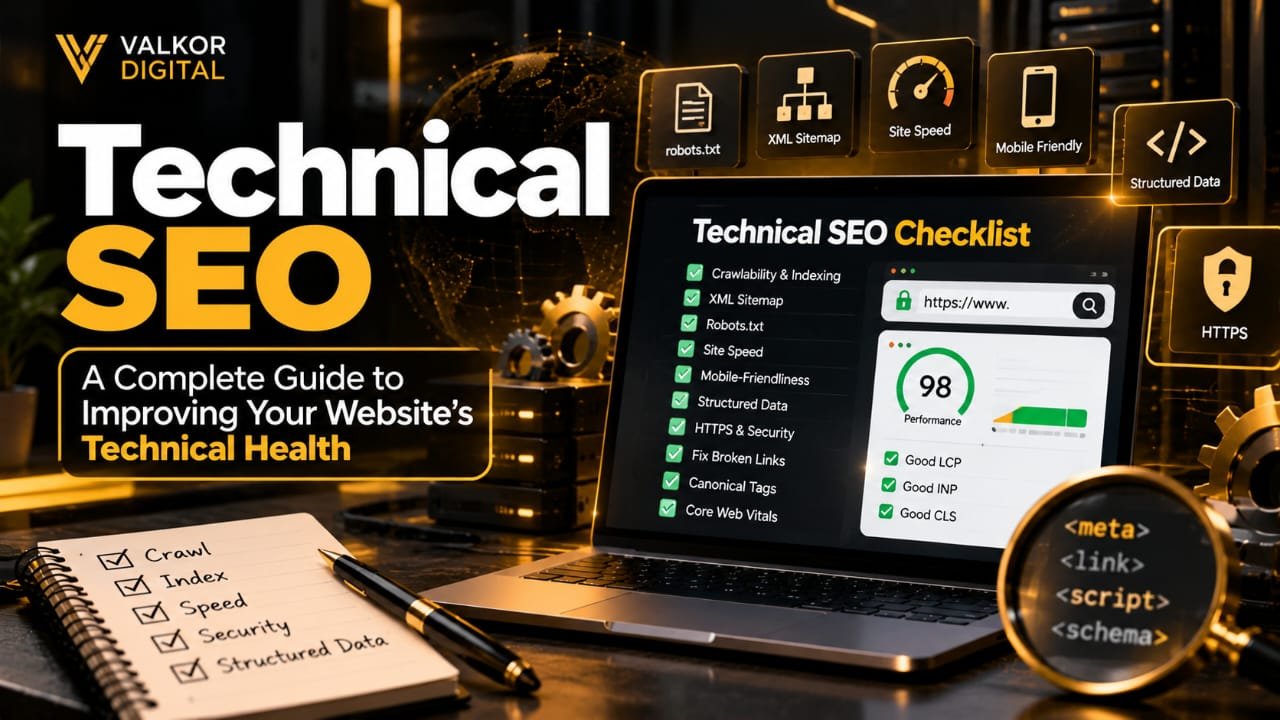
What Does a Technical SEO Audit Include?
A technical SEO audit typically covers the following areas.
1. Website Crawling and Indexing
Search engines need to discover and crawl pages before they can consider them for indexing.
An audit checks whether important pages are accessible to search engines and whether any technical settings prevent them from being indexed.
Common issues include:
- Important pages blocked by robots.txt.
- Accidental noindex directives.
- Pages that search engines cannot access.
- Unnecessary duplicate URLs.
- Important pages missing from internal links.
Not every crawled page will be indexed. The purpose of this check is to identify technical barriers and improve the accessibility of important pages.
2. XML Sitemap Review
An XML sitemap helps search engines discover important URLs on your website.
During a technical SEO audit, the sitemap is checked for errors such as:
- Broken URLs.
- Redirected URLs.
- Non-canonical URLs.
- Pages that should not be indexed.
- Missing important pages.
A sitemap should contain the canonical URLs you want search engines to discover. Submitting it to Google Search Console does not guarantee that every listed page will be indexed.
3. Website Speed and Core Web Vitals
Website performance affects how visitors experience your pages. Slow loading, delayed interactions, and unexpected layout shifts can make a website frustrating to use.
A technical SEO audit may examine Core Web Vitals:
- Largest Contentful Paint (LCP): Measures loading performance.
- Interaction to Next Paint (INP): Measures responsiveness to user interactions.
- Cumulative Layout Shift (CLS): Measures unexpected layout movement.
The audit may also identify oversized images, unnecessary scripts, inefficient code, and other performance problems.
Tools such as Google PageSpeed Insights can help measure performance and suggest improvements.
4. Website Structure and URL Issues
A clear website structure helps users and search engines navigate your content.
A technical audit may identify:
- Broken internal links.
- Unnecessary redirect chains.
- Incorrect redirects.
- Duplicate URL variations.
- Poorly organized website sections.
- Important pages buried too deeply in the site structure.
Fixing these issues can improve navigation and help search engines discover important content more efficiently.
5. HTTPS and Website Security
A technical SEO audit checks whether the website uses HTTPS correctly and whether security-related issues affect access to its pages.
It may identify mixed-content warnings, certificate problems, or redirects between HTTP and HTTPS versions.
HTTPS helps protect information exchanged between browsers and websites. However, HTTPS alone does not guarantee strong security or high search rankings.
6. Mobile Usability
Your website should work properly on mobile devices as well as desktop computers.
An audit may review mobile layouts, text readability, navigation, interactive elements, and content that overflows the screen.
Mobile usability matters because visitors should be able to read content, explore services, and complete important actions without unnecessary difficulty.
7. Structured Data and Canonical Tags
Structured data helps search engines understand certain types of information on a webpage. Canonical tags indicate the preferred URL when duplicate or very similar pages exist.
A technical SEO audit may check whether structured data is valid and whether canonical tags point to the correct URLs.
It can also identify conflicting canonical signals, incorrect schema markup, and other implementation problems.
What Is a Full SEO Audit?
A full SEO audit is a comprehensive review of a website’s overall SEO performance.
Unlike a technical SEO audit, which focuses mainly on technical elements, a full SEO audit examines multiple areas that influence organic search visibility.
It usually includes a technical review, but it also evaluates content, keywords, on-page optimization, internal linking, backlinks, competitor performance, and relevant business goals.
The exact scope depends on the website, industry, and objectives of the audit.
What Does a Full SEO Audit Include?
A full SEO audit typically covers these major areas.
1. Technical SEO Analysis
Technical SEO is one component of a full SEO audit.
It includes reviewing crawling, indexing, sitemaps, website speed, mobile usability, redirects, canonical tags, and other technical elements.
If the website has technical problems, those issues are documented alongside content and authority-related opportunities.
2. Keyword Research and Search Intent
A full SEO audit examines whether your website targets the right keywords for your business and audience.
For example, a digital marketing agency may want to attract people searching for SEO services, technical SEO audits, or content writing services.
The audit may identify:
- Relevant keywords the website is missing.
- Pages targeting the wrong search intent.
- Keywords that are difficult to match with existing content.
- Opportunities for relevant long-tail keywords.
- Multiple pages competing for similar search queries.
Search intent is important because a page should match what users are trying to accomplish.
For example, someone searching for “what is a technical SEO audit” probably wants an explanation, while someone searching for “technical SEO audit services” may be comparing service providers.
3. On-Page SEO Review
On-page SEO involves optimizing individual pages so their topics and purpose are clear to users and search engines.
A full SEO audit may review:
- SEO titles.
- Meta descriptions.
- Main headings and subheadings.
- URL structure.
- Keyword placement.
- Content readability.
- Image alt text.
- Internal links.
- Page relevance and usefulness.
The audit checks whether important pages are well organized, accurately describe their content, and provide useful information to visitors.
For example, a service page should clearly explain the service, who it helps, and how a potential customer can take the next step.
4. Content Quality and Content Gaps
A full SEO audit examines whether your existing content meets users’ needs and supports your business goals.
The review may identify content that is outdated, incomplete, repetitive, poorly structured, or no longer relevant.
It may also reveal topics your competitors cover that your website does not address adequately.
Content recommendations might include:
- Updating outdated articles.
- Improving weak service pages.
- Combining overlapping content where appropriate.
- Creating new pages for relevant topics.
- Adding helpful examples and supporting information.
- Removing or consolidating pages that provide little value when justified.
The goal is not simply to publish more content. It is to make your website more useful and relevant to your intended audience.
5. Backlink Profile Analysis
Backlinks are links from other websites to your website. They can help search engines discover pages and may contribute to understanding a website’s reputation and relevance.
A full SEO audit may review your backlink profile to identify patterns such as:
- Links from relevant websites.
- Important pages that attract few external links.
- Lost backlinks.
- Unusual link patterns that deserve investigation.
- Opportunities to earn relevant links through useful content.
Not every low-quality link is harmful, and not every unfamiliar website linking to you is a problem. Recommendations should be based on evidence rather than automatically removing links or disavowing them.
6. Competitor SEO Analysis
Competitor analysis helps you understand how other websites compete for relevant search queries.
A full SEO audit may compare your website with selected competitors to discover opportunities related to:
- Keyword targeting.
- Content coverage.
- Service page structure.
- Backlinks and authority.
- Search visibility.
- User experience.
For example, if competing websites answer important customer questions that your website ignores, you may have an opportunity to create more useful content.
Competitor analysis should help identify realistic opportunities rather than encourage copying another website’s content.
7. Internal Linking and Website Architecture
Internal links connect related pages within your website. They help visitors navigate between topics and can help search engines understand relationships between pages.
A full SEO audit reviews whether your internal linking supports your important content and service pages.
It may identify pages with few internal links, missing links between related articles, or confusing navigation.
For example, a blog about technical SEO can link to a relevant SEO service page when that link genuinely helps readers.
8. Local SEO Review
For businesses that serve customers in specific locations, a full SEO audit may include local SEO.
This can involve reviewing:
- Google Business Profile information, where applicable.
- Local business contact details.
- Location and service-area pages.
- Relevant local keywords.
- Customer review management practices.
- Local business structured data, when appropriate.
Local SEO is particularly relevant to businesses such as agencies, restaurants, clinics, and service providers that depend on customers in particular areas.
9. SEO Performance and Conversions
A full SEO audit should consider how organic search performance relates to your business goals.
Google Search Console can show search impressions, clicks, queries, and other search performance information. Google Analytics can help you understand what visitors do after arriving at your website.
Depending on the business, useful outcomes may include contact form submissions, phone calls, enquiries, bookings, or sales.
A website can receive organic traffic without generating meaningful business results. Reviewing relevant conversions helps you understand whether SEO is attracting the right audience.
Technical SEO Audit vs Full SEO Audit: Key Differences
The main difference is the scope of the review.
| Feature | Technical SEO Audit | Full SEO Audit |
|---|---|---|
| Main focus | Technical website health | Overall SEO performance |
| Crawling and indexing | Included | Included |
| XML sitemap | Included | Included |
| Website speed | Included | Included |
| Mobile usability | Included | Included |
| SEO titles and headings | Usually limited to technical checks | Reviewed in detail |
| Keyword research | Usually not a major focus | Included |
| Search intent | Usually not a major focus | Included |
| Content quality | Limited technical review | Included |
| Backlink profile | Usually not included in depth | Included |
| Competitor analysis | Usually not included | Often included |
| Local SEO | Limited or excluded | Included when relevant |
| Business conversions | Usually outside the main scope | Can be included |
| Final recommendations | Technical fixes | Broader SEO action plan |
Keep in mind that audit packages vary. Always confirm the actual deliverables before purchasing an SEO audit service.
When Should You Choose a Technical SEO Audit?
A technical SEO audit is a suitable starting point when you suspect that technical problems are preventing search engines from accessing or understanding your website.
Consider a technical audit if:
- Important pages are not being indexed.
- Your website has recently migrated to a new platform or domain.
- Organic traffic dropped after a technical change.
- Your sitemap or robots.txt file may be incorrect.
- Your website has broken links or redirect problems.
- Page performance needs investigation.
- You have launched a new website and want to check its technical setup.
For example, if several important service pages suddenly disappear from Google’s index after a website update, a technical SEO audit can help investigate possible causes.
However, a technical issue should not be assumed to be the reason for every traffic decline. Changes in search demand, competition, content quality, and search algorithms may also affect performance.
When Do You Need a Full SEO Audit?
A full SEO audit is more suitable when you want to understand your website’s overall SEO performance and develop a broader improvement strategy.
Consider a full SEO audit if:
- Your website receives little relevant organic traffic.
- Your competitors perform better for important search terms.
- You are planning a major SEO campaign.
- Your content strategy is unclear.
- Your website attracts visitors but generates few enquiries.
- You want to identify keyword and content opportunities.
- You need a complete review of your SEO strengths and weaknesses.
For example, a business website may have no major technical problems but still struggle to attract customers because its service pages target the wrong keywords or do not answer potential customers’ questions.
In that situation, fixing technical issues alone may not solve the main problem. A broader audit can reveal other opportunities.
How to Choose the Right SEO Audit for Your Business
Choosing the right audit depends on your website’s current condition, your goals, and the problems you need to solve.
Follow these steps to make a more informed decision.
Step 1: Identify Your Main SEO Problem
Start by defining the issue you want to investigate.
Is your website struggling with indexing, slow performance, or broken URLs? A technical audit may be appropriate.
Are you struggling with rankings, content relevance, keyword targeting, backlinks, or conversions? A full SEO audit may provide a more useful overall picture.
Step 2: Review Available Website Data
Check Google Search Console and relevant analytics reports before deciding on the scope.
Look for changes in clicks, impressions, indexing, and organic conversions. Compare suitable time periods and consider seasonal changes before drawing conclusions.
This information can help you understand whether you need a focused technical investigation or a wider review.
Step 3: Consider Your Website’s Size and Complexity
A small business website with a few service pages may need a different audit from a large ecommerce website with thousands of URLs.
Larger or more complex websites may require additional checks for crawl efficiency, faceted navigation, international SEO, structured data, and duplicate pages.
Choose an audit that matches the actual complexity of your website.
Step 4: Review the Audit Deliverables
Before choosing an SEO audit service, ask what the report includes.
A useful audit should explain the problems discovered, why they matter, which pages are affected, and what actions are recommended.
For a full audit, check whether keyword research, content review, backlink analysis, competitor research, and performance tracking are included.
For a technical audit, check whether crawling, indexing, redirects, sitemaps, canonical tags, structured data, and performance are covered.
Step 5: Prioritize Recommendations
Not every issue requires immediate attention.
Start with problems that block important pages from being crawled or indexed, cause significant user experience issues, or affect critical business pages.
Then work through content improvements, internal linking, keyword opportunities, and other recommendations according to their likely impact and implementation effort.
A prioritized action plan is more useful than a long list of issues without clear next steps.
Can a Technical SEO Audit Improve Rankings on Its Own?
A technical SEO audit can identify issues that may prevent search engines from accessing or processing important pages. Fixing confirmed problems can help your website’s technical foundation.
However, technical improvements do not guarantee higher rankings.
If your website has technically sound pages but weak content, poor keyword targeting, limited relevance, or strong competition, you may need additional SEO work.
That is why a technical audit and a full SEO audit serve different purposes. One investigates technical health, while the other evaluates a wider range of factors that contribute to organic search performance.
Common SEO Audit Mistakes to Avoid
Whether you choose a technical audit or a full SEO audit, avoid these common mistakes:
- Focusing only on automated scores: Audit tools can identify potential issues, but their results need context and verification.
- Ignoring search intent: A page may contain the right keywords but fail to answer the user’s actual question.
- Fixing minor issues first: Prioritize important problems instead of spending all your time on small warnings.
- Making changes without testing: Technical updates can create new issues if they are not reviewed carefully.
- Removing pages without a plan: Deleting useful content or changing URLs unnecessarily can affect visitors and search visibility.
- Expecting instant results: SEO improvements can take time, and rankings are not guaranteed.
- Choosing an audit based only on price: Review the scope, expertise, deliverables, and usefulness of the recommendations.
The best audit is one that helps you understand your website and take practical steps toward your business goals.
Frequently Asked Questions
Is a technical SEO audit part of a full SEO audit?
Yes. A full SEO audit generally includes technical SEO checks along with reviews of content, keywords, on-page optimization, backlinks, and other relevant areas. The exact scope depends on the service provider.
Which is better: a technical SEO audit or a full SEO audit?
Neither is always better. A technical audit is useful when you need to investigate technical problems. A full audit is better when you want a broader assessment of your website’s SEO performance and opportunities.
How often should a business website have an SEO audit?
There is no fixed schedule for every business. Review your website regularly and consider a focused audit after major migrations, redesigns, or significant technical changes. A broader audit can be useful when performance changes or business goals require a new strategy.
How long does an SEO audit take?
The time required depends on website size, technical complexity, audit scope, and the depth of analysis. A small website may need less time than a large ecommerce or international website. Ask the provider for a realistic timeline based on your website.
Can I perform an SEO audit myself?
Yes. You can use tools such as Google Search Console, Google Analytics, Google PageSpeed Insights, and SEO crawling software to review many important areas. More complex websites may require technical knowledge and deeper analysis.
Does every business need a full SEO audit?
Not necessarily. The right choice depends on the business’s goals and current problems. Some businesses may initially need a focused technical review, while others benefit from a complete assessment of their SEO strategy.
Conclusion
A technical SEO audit and a full SEO audit both help businesses understand how to improve their websites, but they differ in scope.
A technical SEO audit focuses on the technical foundation of your website, including crawling, indexing, site speed, redirects, sitemaps, and structured data.
A full SEO audit goes further by reviewing technical health alongside keyword targeting, content quality, on-page SEO, internal links, backlinks, competitor performance, and relevant business goals.
If you are dealing with a specific technical issue, a technical SEO audit may be the right place to start. If you want a complete understanding of your website’s SEO performance and a broader improvement plan, a full SEO audit is usually more suitable.
The most important step is to identify your business needs, review the available evidence, and prioritize recommendations that can make your website more useful to visitors and easier for search engines to understand.