Many business owners assume that all website writing serves the same purpose, but understanding content writing vs copywriting is essential for building an effective online presence. While both disciplines involve writing words for a website, they serve very different goals, follow different structures, and require different skill sets. Choosing the wrong approach for a given page can quietly undermine both search visibility and conversions.
This guide breaks down the real differences in content writing vs copywriting, explains when each is appropriate, and helps business owners decide exactly what their website actually needs.
Understanding Content Writing vs Copywriting
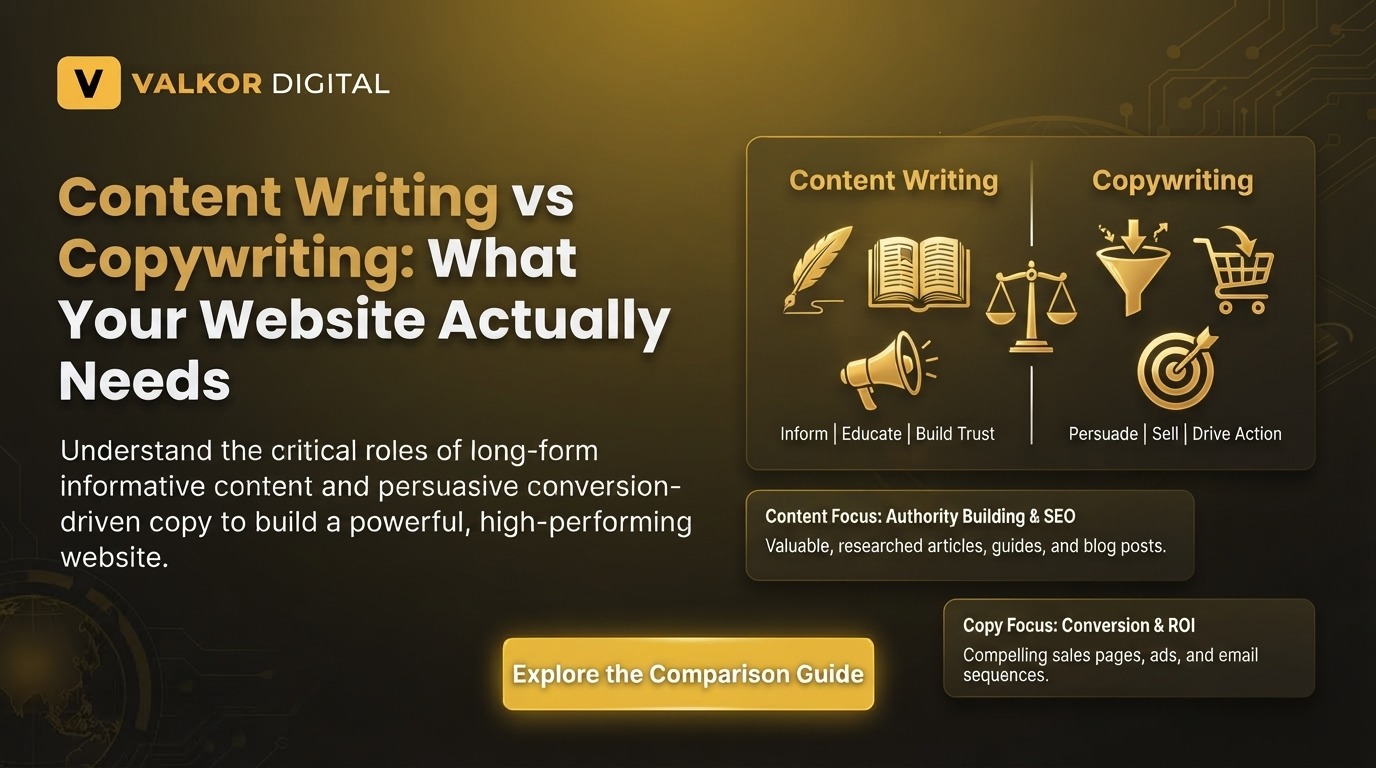
At its core, the distinction in content writing vs copywriting comes down to purpose. Content writing is primarily informational, designed to educate, inform, or build trust with readers over time. Copywriting, on the other hand, is persuasive by design, written specifically to drive a reader toward a particular action, such as making a purchase or filling out a form.
Both are essential to a well-rounded website, but confusing the two often results in blog posts that fail to educate or sales pages that fail to convert.
Why This Distinction Matters for Businesses
Many websites underperform not because the writing is poor, but because the wrong type of writing was used for a given page. A homepage written like a blog post may fail to convert visitors, while a service page written like an advertisement may feel pushy and untrustworthy to readers seeking genuine information first.
What Is Content Writing?

Content writing focuses on providing value through information, education, and storytelling. It typically includes blog posts, articles, guides, and other long-form material designed to attract and engage an audience over time.
The Purpose Behind Content Writing
Rather than pushing for an immediate sale, content writing aims to build authority, answer questions, and nurture trust with readers. This approach plays a central role in any solid website content strategy, as it consistently attracts organic traffic and positions a business as a credible source of information within its industry.
Common Examples of Content Writing
Blog articles, how-to guides, industry news updates, and educational resources all fall under content writing. These pieces typically prioritize depth, clarity, and usefulness over persuasive language or direct calls to action.
What Is Copywriting?
Copywriting exists to persuade. Every word is carefully chosen to move a reader toward a specific outcome, whether that’s clicking a button, signing up for a newsletter, or completing a purchase.
The Purpose Behind Copywriting
Unlike content writing, copywriting is inherently action-oriented. It leans on persuasive techniques, emotional triggers, and clear calls to action to guide readers toward a decision, often within a short amount of time or limited attention span.
Common Examples of Copywriting
Landing pages, product descriptions, advertisements, email campaigns, and homepage headlines are all classic examples of copywriting. These pieces are typically shorter, more direct, and structured specifically around conversion.
Blog vs Sales Copy: A Practical Comparison
Understanding blog vs sales copy helps clarify exactly where each writing style fits within a broader website strategy.
Structure and Tone Differences
Blog content tends to be longer, more conversational, and structured around thoroughly answering a question or exploring a topic. Sales copy, by contrast, is typically concise, direct, and built around a clear persuasive argument leading to a specific action.
Different Goals, Different Metrics
Blog content is often measured by engagement metrics such as time on page, organic traffic, and search rankings. Sales copy is measured primarily by conversion rates, click-through rates, and direct revenue impact, reflecting its more immediate, action-focused purpose.
The Role of SEO Copywriting
A hybrid approach, often referred to as SEO copywriting, blends the informational value of content writing with the persuasive structure of traditional copywriting, all while remaining optimized for search engines.
Why SEO Copywriting Matters for Service Pages
Service and product pages often benefit most from SEO copywriting, as these pages need to rank well in search results while still persuading visitors to take action once they arrive. This blended approach ensures pages aren’t purely informational without direction, nor purely persuasive without the search visibility needed to attract traffic in the first place.
Balancing Keywords With Persuasive Language
Effective SEO copywriting incorporates relevant keywords naturally while maintaining a persuasive, benefit-driven tone, avoiding both keyword stuffing and overly salesy language that can undermine trust.
Building a Website Content Strategy That Uses Both
A strong website content strategy doesn’t choose one approach over the other, it strategically applies content writing and copywriting to the pages where each will perform best.
Where Content Writing Belongs
Blog sections, resource libraries, and educational guides should lean heavily on content writing, prioritizing depth and genuine usefulness to attract and retain organic traffic over time.
Where Copywriting Belongs
Homepages, service pages, landing pages, and any page designed to drive a specific action should prioritize copywriting principles, focusing on clarity, persuasion, and a clear path to conversion.
Where the Two Overlap
Service pages targeting specific keywords often require a careful blend of both, informative enough to satisfy search intent and rank well, while persuasive enough to convert visitors once they arrive, which is exactly where SEO copywriting proves most valuable.
Common Mistakes Businesses Make
Many websites underperform simply because content writing and copywriting principles are applied to the wrong types of pages.
Treating Every Page Like a Sales Pitch
Overly persuasive language on informational blog content can feel inauthentic and pushy, often driving readers away rather than building the trust content writing is meant to establish.
Writing Service Pages Like Blog Posts
Service pages that read like lengthy educational articles without clear calls to action often fail to convert visitors, even when they successfully attract traffic through search rankings.
Why Professional Expertise Makes a Difference
Understanding exactly which approach a given page needs, and executing it effectively, often requires specialized writing expertise that many businesses don’t have in-house. Partnering with experienced content writing services ensures that every page on a website, from blog articles to persuasive service pages, is written with the right purpose and structure in mind, rather than applying a one-size-fits-all approach across the entire site.
Final Thoughts
Understanding the difference in content writing vs copywriting is essential for building a website that both attracts visitors and converts them into customers. While content writing builds authority and drives organic traffic through genuinely useful information, copywriting persuades readers toward specific actions that directly support business goals. A well-rounded website content strategy recognizes exactly where each approach belongs, using SEO copywriting to bridge the gap where informational depth and persuasive structure need to work together. Businesses that apply the right writing style to the right page are far better positioned to succeed both in search rankings and in actual conversions.
Frequently Asked Questions
What is the main difference between content writing and copywriting?
Content writing focuses on informing and educating readers, while copywriting is specifically designed to persuade readers toward taking a particular action, such as making a purchase.
Does my website need both content writing and copywriting?
Yes, most successful websites use content writing for blogs and educational resources, while relying on copywriting for homepages, service pages, and other conversion-focused content.
Is SEO copywriting different from regular copywriting?
Yes, SEO copywriting combines persuasive writing techniques with keyword optimization, ensuring content ranks well in search engines while still driving conversions.
Which is more important for a business website, blogs or sales pages?
Both are important, as blogs help attract organic traffic and build authority, while sales pages convert that traffic into actual leads or customers, making them equally essential to overall success.
Can one writer handle both content writing and copywriting effectively?
While some writers are skilled in both areas, many businesses find better results working with specialists or agencies experienced in applying the right approach to each specific page type.